Is there lactose in butter?
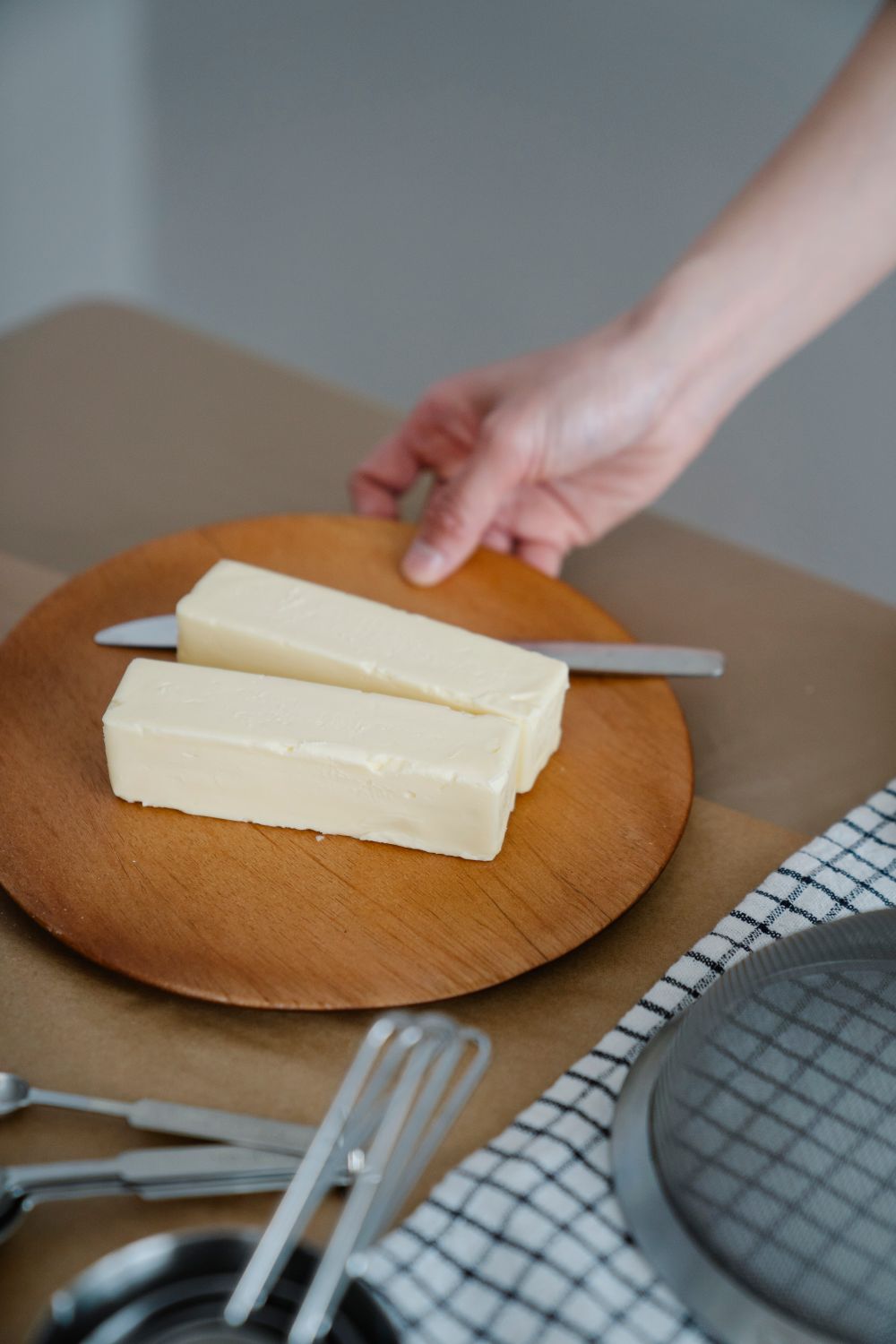
Low — usually fine.
Butter is very low in lactose. It's mostly fat, with only tiny traces of the milk sugar left behind — so the majority of people with lactose intolerance can enjoy it without trouble.
If you’ve been spreading margarine on your toast just in case, you might not have to. Butter is one of the gentlest dairy foods for lactose-intolerant tummies, because it’s around 80% fat and contains only a whisper of lactose — roughly 0.1g per tablespoon, compared to about 12g in a glass of milk.
Here’s why: when cream is churned into butter, most of the water and milk solids (where lactose lives) are left behind. What remains is largely butterfat. That’s why even people who react to milk often find butter sits perfectly well.
One to check: if butter genuinely upsets you, it’s worth considering whether it’s a milk-protein sensitivity rather than lactose — they’re different things, and butter still holds trace milk proteins.
How much lactose is in butter?
Butter holds only a trace of lactose — roughly 0.02–0.9 g per 100 g, or about 0.05 g in a 10 g pat, compared with around 12 g in a glass of milk. Most of the lactose leaves with the buttermilk when cream is churned, so even quite sensitive people usually tolerate normal butter amounts. Clarified butter and ghee take it a step further, with the milk solids removed almost entirely.
| Food | Lactose per 100 g | Per typical serve |
|---|---|---|
| Butter | 0.02–0.9 g | ~0.05 g (10 g pat) |
| Regular milk | 4.8 g | ~12 g (250 mL) |
| Ghee | ~0.003 g | ~0 g |
Figures: Shakerdi et al. 2022. See the full lactose chart & sources.
When to take a little care
If you eat butter by the spoonful (hello, baking) the small amounts can add up — but for everyday spreading and cooking, it’s rarely an issue. And if you have a diagnosed milk allergy rather than lactose intolerance, the trace proteins matter, so check with your GP.
If butter isn't handy, reach for…
Common questions
Can lactose-intolerant people eat butter?
Is butter or margarine better for lactose intolerance?
Does clarified butter have lactose?
Want the full picture? Grab our free Living Lactose-Free in Australia cheat sheet — it sorts 60+ foods like this one so you never have to guess at the supermarket again.