Is there lactose in parmesan?
Virtually none — one of the safest.
Parmesan is aged for a long time, and that long maturing breaks down almost all the lactose. Genuine aged parmesan is virtually lactose-free and one of the best cheese choices for lactose intolerance.
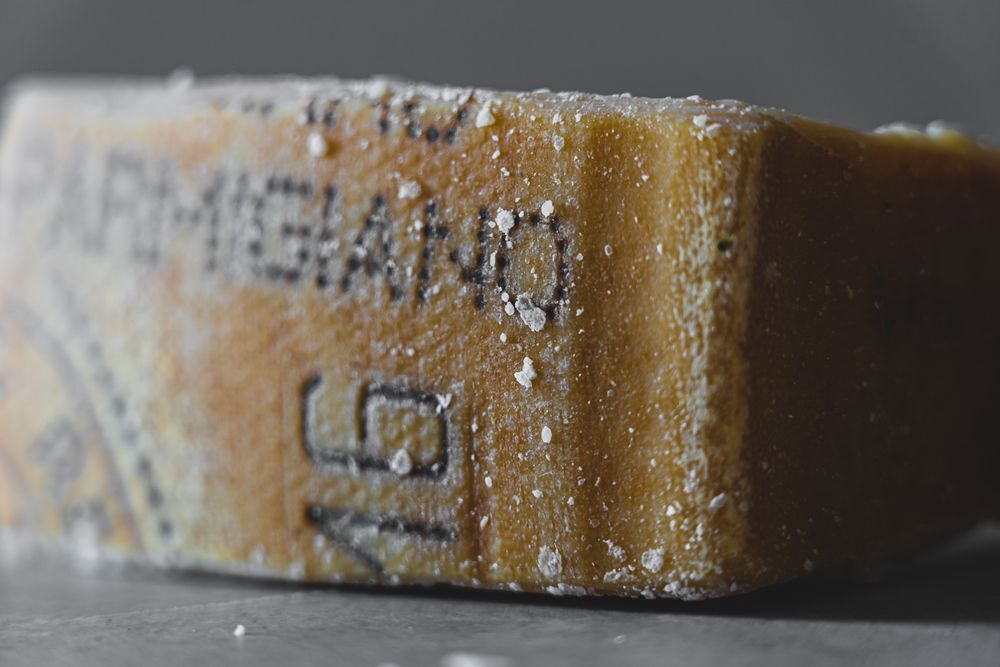
If you’ve been going without that grating of parmesan on your pasta, here’s your permission slip. Real parmesan is aged for many months, often well over a year, and during that time bacteria break down virtually all the lactose. What’s left is negligible.
One caveat: this applies to properly aged, genuine parmesan (and similar long-aged hard cheeses like grana padano and pecorino). Cheaper “parmesan-style” powders can differ, so favour the real block and grate it yourself.
How much lactose is in parmesan?
Traces only — under 0.1 g per 100 g, essentially nil in a 30 g grating. It’s among the lowest-lactose cheeses there is, which is why even sensitive people usually tolerate it freely.
| Food | Lactose per 100 g | Per typical serve |
|---|---|---|
| Parmesan | <0.1 g | ~0 g (30 g) |
| Cream cheese | 2–3.6 g | ~0.6–1.1 g (30 g) |
| Regular milk | 4.8 g | ~12 g (250 mL) |
Figures: Portnoi & MacDonald 2015. See the full lactose chart & sources.
When to take a little care
Pre-grated, heavily processed “parmesan” products may not be aged the same way. Stick to genuine aged parmesan for the lowest lactose.
If parmesan isn't handy, reach for…
Common questions
Is parmesan lactose-free?
Can lactose-intolerant people eat parmesan?
Is grana padano the same?
Want the full picture? Grab our free Living Lactose-Free in Australia cheat sheet — it sorts 60+ foods like this one so you never have to guess at the supermarket again.